“The next stop, I am getting off of this train, no matter what!” I said, fully determined. Abhishek glanced up and mumbled: “And they call it Gorakhpur Express… Arpita said nothing. The three of us were stuck together by the shared ordeal of Indian Railways. The twelve-hour delay affected Abhishek and Arpita much more: they missed their connection, with family waiting back home to celebrate Diwali. Strangely enough, it felt as if only my patience with the train system was wearing thin…
As we were rolling stepfoot into Domingarh, a ten-minute ride from our final destination, Abhishek suddenly stood up and, without warning, jumped off our train. “See you in Bagaha!” he shouted as he disappeared into the thick smoke surrounding Domingarh. “Floris, don’t get off, this neighbourhood isn’t any good… look around, there’s absolutely nothing but dust and garbage!” Arpita argued. Looking outside you could indeed hardly see an actual station. I agreed with Arpita, I could not leave here. Indecision kept clouding my thought process, uncertainty about where I would sleep the night, and all my former resolve had gone up in thin air.
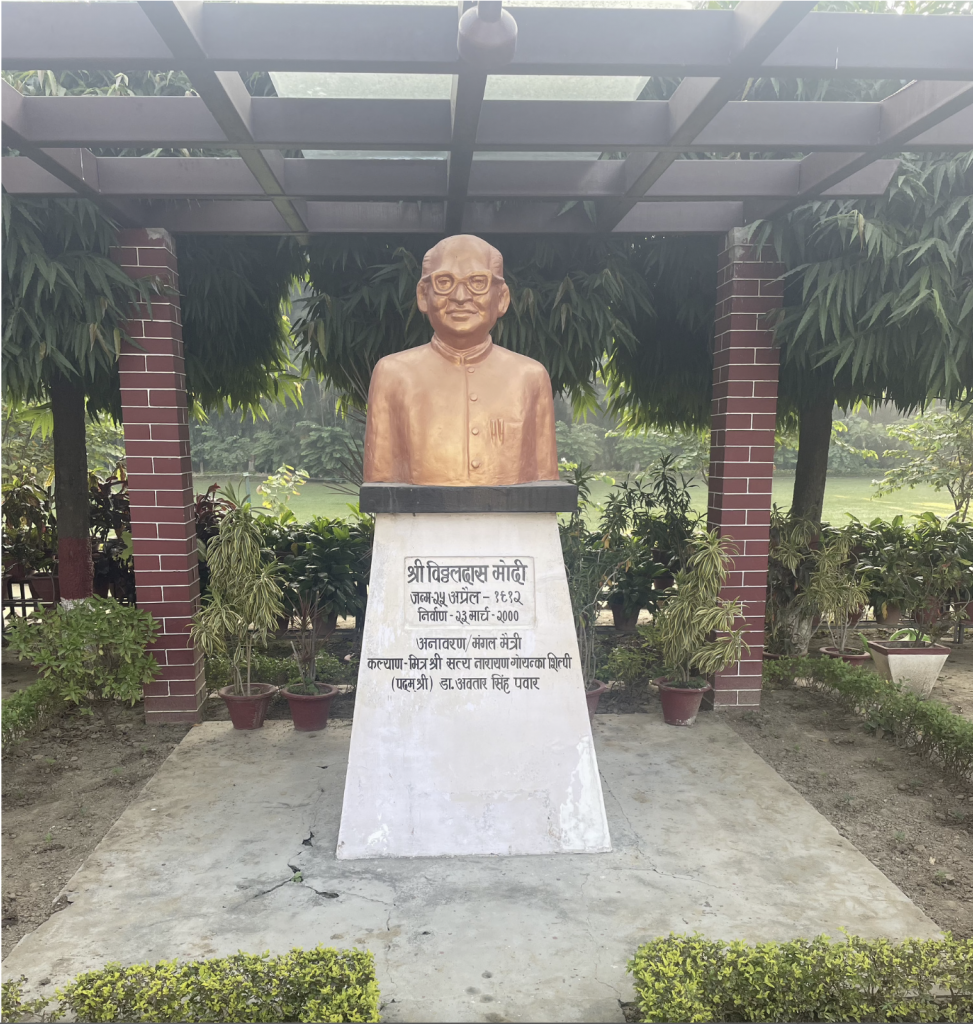
Eventually, the train started moving again and barely ten minutes later we arrived in Gorakhpur. I took an auto to Arogya Mandir. Though Gorakhpur was full of life at midnight, Arogya Mandir seemed fast asleep when I arrived. Founded in 1940 by the non-violent resister Vithal Das Modi, Arogya Mandir is a naturopathic ashram. I had come to learn from its ideas on naturopathic non-violence and its role in India’s independence movement. But when I arrived, I found the gate firmly shut. Just as worries about the night began creeping in, I spotted a guard at the far end of the wall. He asked whether I had an appointment with Vimal Modi. I nodded, and moments later the beautiful wooden doors opened. A gentle, well-kept man stood before me and said: Don’t excuse yourself for being late, the train is outside of your control. Little did I know that he was the son of Vithal Das Modi himself, the revolutionary and naturopath who founded Arogya Mandir. Feeling embarrassed of how unkept, and probably how smelly (!), I was after my long train journey, I kept my thick jacket tightly closed. He put me at ease, offered me a room, and suggested I freshen up. We would talk in the morning.
I reported at six in the morning, and with the others I shared a cup of tea before starting to walk on the circular mud path beside the dormitory corridors. My fellow path walkers looked visibly surprised to see me. Vimal Modi soon walked next to me and we began talking. He spoke about his father, appeal of the naturopathic lifestyle, his meetings with Gandhi, and his own pride in the centre. Insisting on the non-violent nature of naturopathic treatment, he was careful to separate it from politics. “Gandhi requested Vithal Das Modi to only focus on naturopathy, not politics”, he explained. He was equally glad to hear why I came.
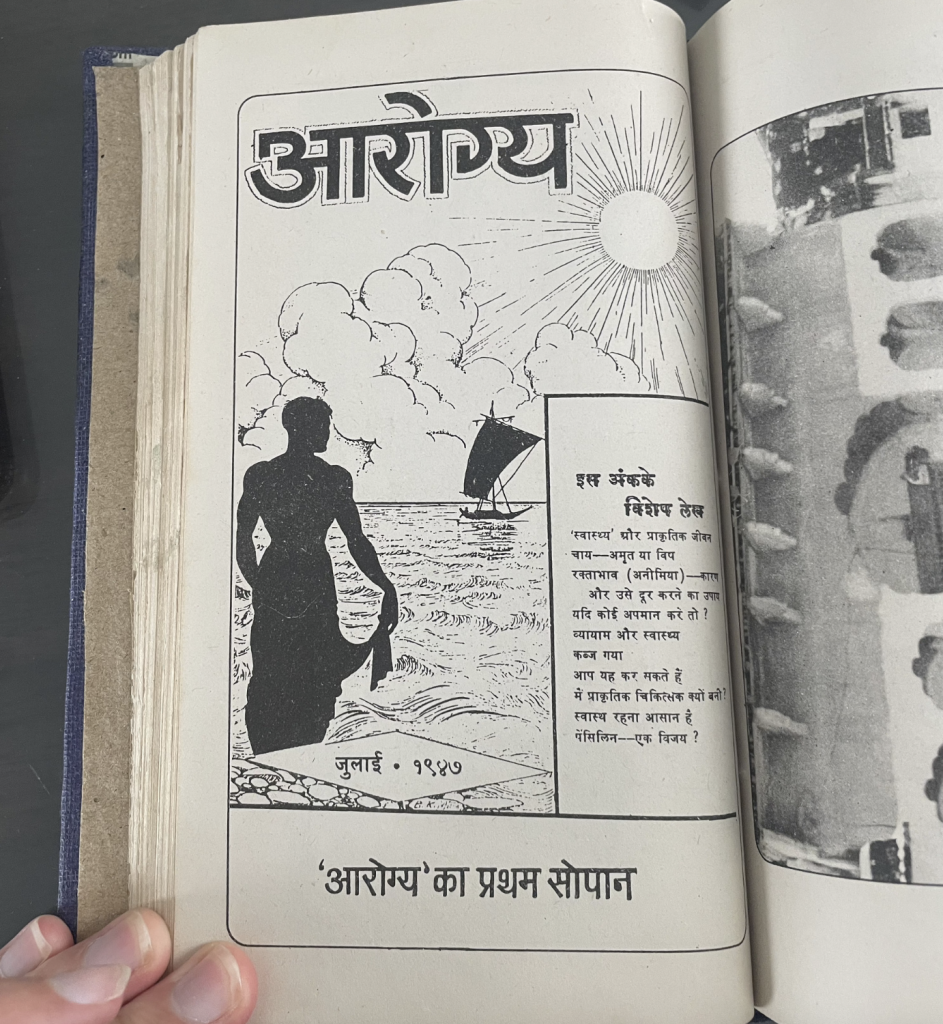
After the walk a light nature cure breakfast was ready for me: fresh papaya, walnuts, and sprouted greens. Treatment then began for the “patients”, with heat packs, mud packs, steam baths, and enemas. The last one I politely declined… After some persistence, I received access to library material, where I read more about Vithal Das Modi’s non-violent action and the ashram’s role in sheltering revolutionaries. Old photographs of Gorakhpur were there too. As Vimal had mentioned in the morning, before independence Arogya Mandir stood on the city’s outskirts, in quiet nature. Over time, the city, with all its noise and pollution, had crept closer to the ashram. And yet, as a Buddhist monk from Arunachal Pradesh told me over dinner, no ashram set in such chaos ever keeps this kind of calm!